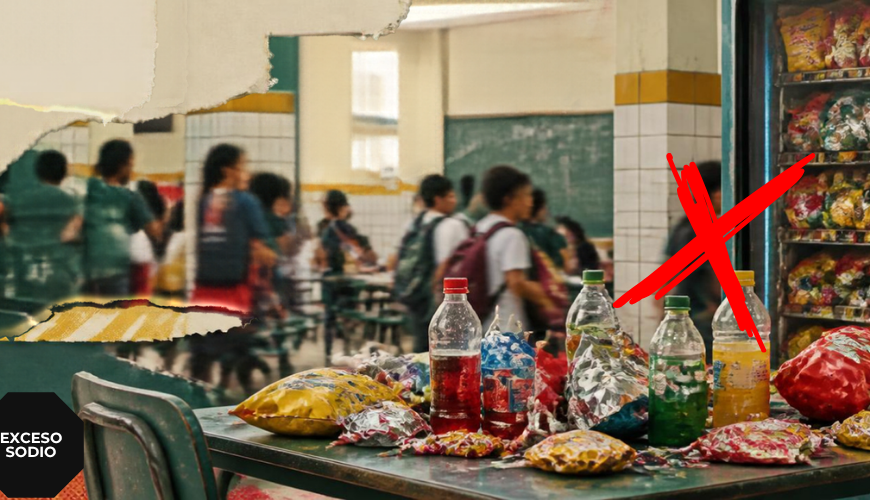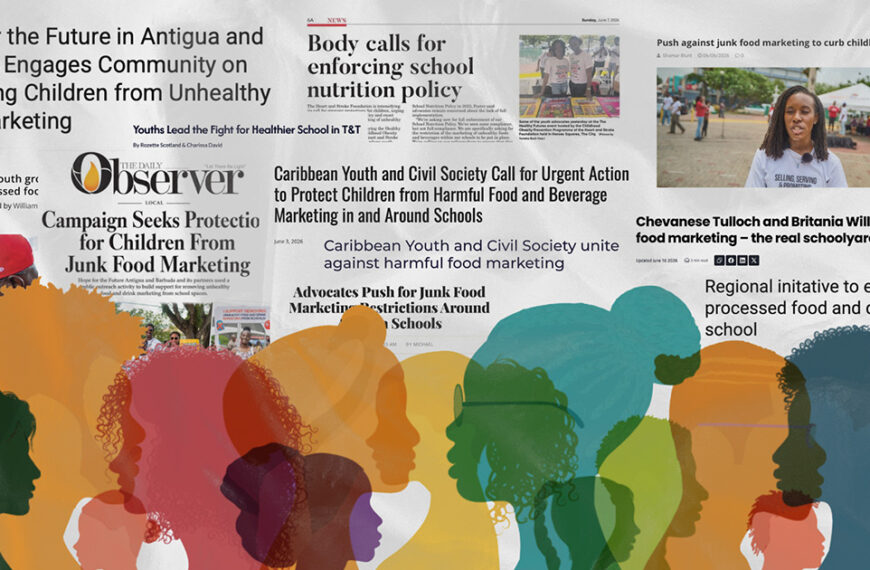
Caribbean governments are increasingly committing to healthier school food environments. Yet some still question whether the public is ready for stronger policies to protect children from the marketing of unhealthy foods.
Recent conversations across six Caribbean countries suggest otherwise.
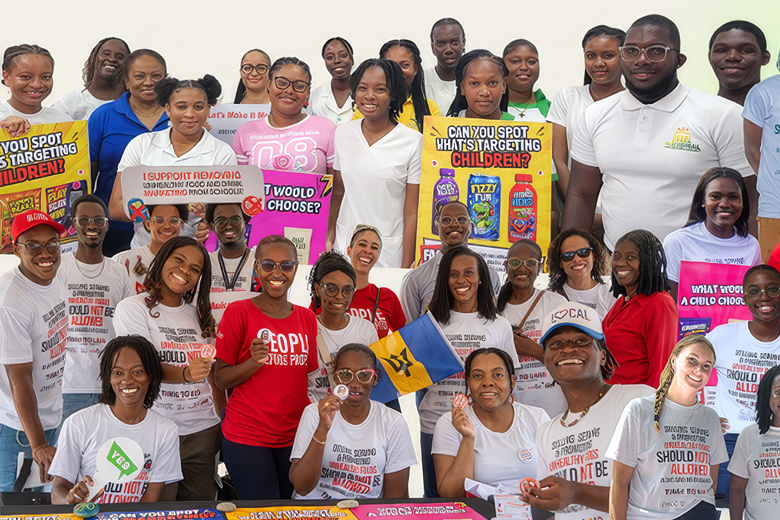
Through Hope for the Future 3.0—a youth-led initiative coordinated by the Healthy Caribbean Coalition (HCC), Healthy Caribbean Youth (HCY), and civil society partners—youth advocates engaged parents, teachers, students and community members in Antigua and Barbuda, Barbados, Grenada, Jamaica, St. Kitts and Nevis, and Trinidad and Tobago. Together, they explored one central issue: how the pervasive marketing of ultra-processed foods in and around schools shapes children’s food choices and undermines healthier school environments.
The response was consistent.
Communities want schools where nutritious foods are available, affordable and promoted—not overshadowed by the marketing of ultra-processed foods. They also recognised that while nutrition education is essential, it cannot overcome environments where unhealthy products are often the cheapest, most accessible and most heavily marketed options.
The conversations revealed something encouraging. Once people understood how marketing influences children’s food choices, they quickly recognised the imbalance. Parents want to make healthy choices, but they cannot do so alone. They need supportive school environments, public policies and, where appropriate, legislation that makes the healthy choice the easy choice.
As Natalia Burton, Project Officer at the Jamaica Youth Advocacy Network (JYAN), reflected:
These are not issues that children or families can solve alone. They require policy and legislative action. At this stage, we need to move beyond proving the need for healthier school environments and focus on meaningfully implementing the policies and legislation that will create safer spaces for our children to thrive.
Hope for the Future 3.0 also demonstrated that healthier school food environments—and healthier Caribbean communities more broadly—should not be built for young people. They should be built with them.
Across the region, youth advocates facilitated discussions and documented community perspectives that are now informing conversations with Ministries of Health and Education. In countries such as Antigua and Barbuda and St. Kitts and Nevis, where school nutrition policies are being developed, and Barbados, Jamaica and Trinidad and Tobago, where implementation and refinement continue, initiatives like Hope for the Future demonstrate why public engagement must remain central to policymaking. Listening to children, families and communities helps ensure that policies are not only evidence-informed, but also grounded in the realities of everyday life.
As Healthy Caribbean Youth (HCY) member Renée Thomas-Venugopal from Grenada reflected:
This was an excellent opportunity to engage students and see them take the lead in creating content on the importance of addressing marketing to children. The experience highlighted not only the value of educating young people, but also the importance of including them in advocacy efforts, as they are powerful voices for healthier school environments.
Children themselves reinforced that message. During the Trinidad and Tobago activity, students imagined their “dream school”—one where healthy food is accessible, nutritious choices are celebrated and every child has the opportunity to thrive.
As Healthy Caribbean Youth (HCY) member Rozette Scotland observed:
If they can envision a school that truly embraces healthy eating habits, then so can our policymakers.
That is what Hope for the Future has shown us.
The public is not resisting healthier school food environments. Communities understand the challenges. Young people are leading the conversation. Governments have already begun introducing policies that can create healthier environments for children.
The challenge now is not convincing people that change is needed. It is ensuring implementation—guided by evidence and informed by communities—keeps pace with public support.
The public has spoken.
Now policy must answer.
The post The Public Has Spoken on Healthy School Food Environments. Now Policy Must Catch Up appeared first on Healthy Caribbean Coalition.
Healthy Caribbean Coalition Leer más